
The front wheel of the old bicycle wobbled a little as it crossed the final stony stretch, but Carmelo managed to keep his balance.
Sunlight was barely filtering through the horizon any more, giving way to a dimness that enveloped Quintana's main street.
He took a deep breath, wiped the sweat from his forehead with the back of his hand and let go of the handlebars.
The rural silence gave him a timid welcome: the breeze rustled a few dry leaves against the adobe walls, and in the background the distant bleating of a couple of sheep could be heard. With a gentle tap on his chest, Carmelo gave himself courage before lifting the door knocker and calling.
The door gave way after a screech that echoed across the facade, and on the other side appeared a sturdy-looking man, with a scowl and a cautious gaze. The shadow of his hat hid part of his face, but allowed a certain curiosity to show through. It was Pedro, the farmer of the 14 hectares of wheat that had been heard so much about.
—Who goes there? —he asked in a deep voice.
—Good evening —replied Carmelo, catching his breath—. Excuse the time, I'm Carmelo Rodero, from Pedrosa de Duero. I've come to offer to bale your land this harvest.
Surprised by the intrusion at that hour, Pedro maintained a moment of silence. Then, with a slight gesture, he invited Carmelo into the yard. There, The dirt floor was dotted with scraps of straw and tools. A kerosene lamp, hanging from a pillar, cast a yellowish, uneven light that flickered with the breeze.
Carmelo, aware that that first chat was crucial, he took a small piece of paper from his jacket pocket on which he had jotted down some notes. I wanted to show them to Pedro to illustrate the basic idea of the baler: how it gathered the straw, how it compressed and tied it into more compact bales, and why that meant less time and effort for the farmer. However, he met with Pedro's distrustful gaze, who, with his arms akimbo, did not look convinced.
They say that that business about machines taking away jobs… —murmured the man.
Carmelo hurried to calm her fears:
—On the contrary —he explained—, my intention is to make things easier for your people so that they can dedicate their time to other tasks, such as sowing or selling, without wasting energy on such heavy work. Furthermore, with that baler the straw is cleaner and takes up less space, waste is avoided and it can therefore be sold or stored better.
Pedro pulled a face, weighing up Carmelo's words. You could tell he wasn't used to strangers turning up with novel ideas. At last, with a sigh, he decided to give him the benefit of the doubt.
—Well… let's talk numbers, lad. How much is this service going to cost me?
Carmelo, with his heart still beating hard, slid his finger across the slip of paper and explained in detail the cost per hectare, the long-term savings and how flexible it could be depending on the number of bales obtained. Slowly, in a steady voice, he reiterated the fundamental idea: it's about making every penny invested go further.
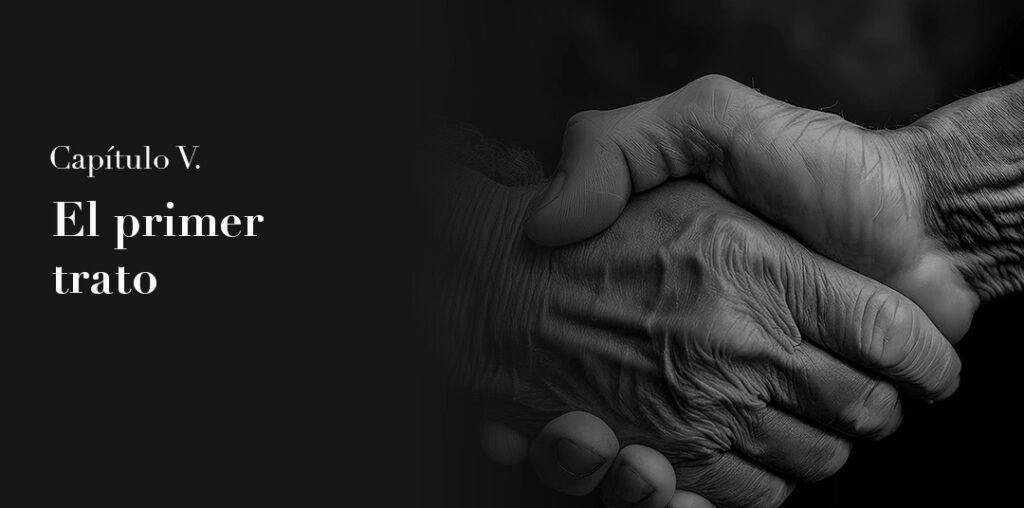
Pedro, after listening carefully, kept silent for a few seconds before holding out his hand to seal the deal. Carmelo immediately perceived the hardness of those rough fingers, weathered by years of farming and the relentless sun. That firm handshake confirmed the trust needed to get the baler running as soon as the harvest required it.
—I'm not promising that this will completely convince me —she warned—, but if I see that it works, there'll be no shortage of people finding out what your machine does.
Carmelo smiled, relieved. He understood that in the words of that rough farmer lay the opportunity to spread his work to other villages.